Author Archive: Nicholas Hellmuth
Dr. Nicholas Hellmuth is director of FLAAR Reports (Foundation for Latin American Anthropological Research). For more information visit www.digital-photography.org
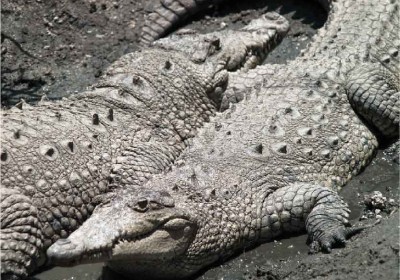
Crocodiles, caimans and alligators in Mayan art & mythology of Guatemala
There are two species of crocodiles and one species of alligator in the Mayan regions of Guatemala, Belize, Honduras and Mexico. Caiman crocodilus is a caiman, but considered an alligator (not a crocodile) despite its name “crocodilus.” The pattern of scales on this creature is very distinctive: no spikes or sharp spines but lots of [...]
The Nance Tree
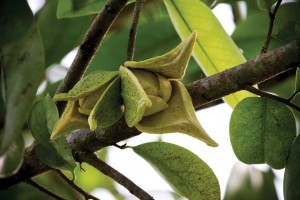
Seven Macaw is the False Sun deity, featured in the Mayan myth of the Popol Vuh. His name in the K’iche’ Mayan language of Guatemala is Vukub-Cakix. The perch and favorite food of Seven Macaw is specifically identified as a nance tree in most translations of the Popol Vuh. “This is the great tree of [...]
The Sacred Red Bean
But not from a vine, from a tree — the Palo de Pito The palo de pito tree is commonly found throughout the Highlands of Guatemala. It produces a bright red bean, which is used for divination by Maya shamans. The book of Popol Vuh is very clear about the red beans from this tree [...]
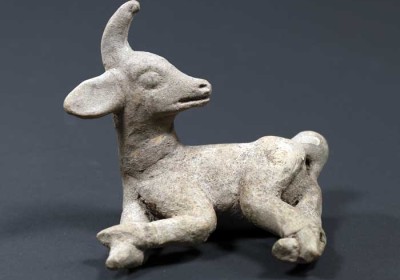
The Ancient Maya And The White-tailed Deer
Deer are among the 10 most commonly depicted animals on Mayan vases, plates and bowls of the Late Classic period. Although two species of deer inhabit the Mayan heartland, the white-tailed deer, Odocoileus virginianus, is the one usually depicted in Mayan art. For the Classic Maya, the deer was in some ways as important as [...]
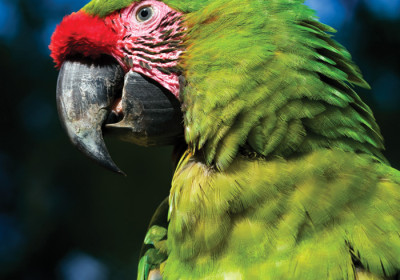
Macaws and Parrots in 3rd-9th Century Mayan Art
by Dr. Nicholas M. Hellmuth The most remarkable deity in the ancient Mayan myth of the Popol Vuh is “Seven Macaw.” In reality this preening bird-creature is pictured in Classic Mayan art as a snake-eating raptor. So in most renditions in murals and pottery, Seven Macaw is a hawk-like composite creature without very many features [...]
Ceiba pentandra
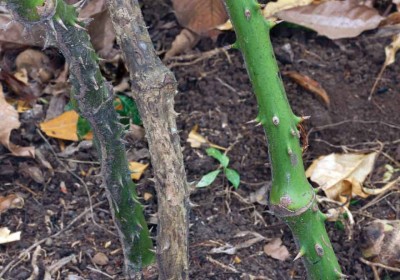
Sacred tree for Classic Maya, national tree for Guatemala today by Dr. Nicholas M. Hellmuth Look at the sacred ceiba tree and you may notice that its spines resemble the round bumps that the Maya incorporated on their incense burners, cache vessels and urns. Notice the pattern of conical, spine-like protuberances on these thousand-year-old ceramic [...]
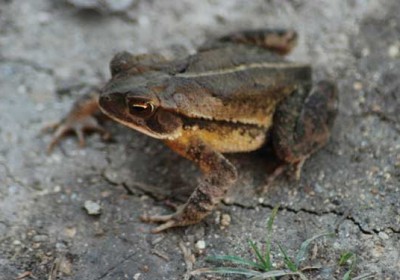
Sacred Toads
In the Popol Vuh a toad is one of the messengers of the gods of Xibalba. The message starts in the belly of a louse, which is swallowed by a toad. The toad is swallowed by a snake. The snake is picked up by a falcon or hawk and delivers the message of the gods to the Hero Twins.
Peccary
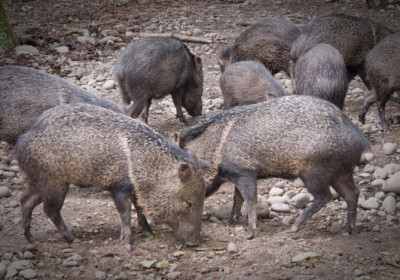
This is first in a series of Sacred Animals & Exotic Tropical Plants which will cover ethno-zoology and ethno-botany as related to Mayan archaeology


Recent Feedback